




130 Years 130 Stories
Bringing together 130 years of stories and turning points is no small challenge - yet it is one we gladly embrace. We have sought out themes and perspectives that present the fascinating world of industrial property, copyright, and one of Hungary’s oldest public institutions in a vivid and engaging way. We invite everyone to join us on a journey, an adventure that explores the universe of intellectual property not in a linear timeline, but through stories. Because IP is neither abstract nor distant; it is vibrant, constantly evolving, and filled with stories that shape our world, and the lives of all of us.
130 years, 130 stories - let’s be proud of what we’ve built together. Discover our inspiring stories!
Inventing Tomorrow
We are driven by a desire to understand why things happen the way they do around us, and intellectual property is no exception. The breathtaking pace of technological progress continues to reshape the landscapes of creativity, innovation, and invention. In recent years, artificial intelligence has fundamentally transformed industrial property and copyright alike, yet every era has had its defining turning points: moments when a new chapter began and nothing was ever quite the same again. In this category, we revisit these milestones: the stories that accelerated progress, redefined possibilities, and changed the course of innovation. We also look ahead, asking what the next 130 years might have in store.

Growing Plants Without Soil
Traditionally, plant development requires properly prepared soil. However, with a new method called hydroponics, plants can be grown without soil. The term originates from the Greek words “hydro” (water) and “ponos” (work), and refers to a cultivation technique in which plants grow not in soil but in nutrient-rich water solutions. This approach enables more sustainable operation and higher yields, while also requiring less space.
Building on this technology, the Hungarian team Green Drops developed its innovative solution: the award-winning hydroponic tower called Rotower. This invention, protected by a utility model protection, makes it possible to grow nutrient-rich lettuces, herbs, certain vegetables, and fruits year-round without the use of pesticides.

The Achievements of Our Universities
Many innovations are developed at universities that directly address healthcare, environmental, and technological challenges. We can all experience the impact of these advancements. The legal protection of the new knowledge and technological solutions created in this way is provided by patents.
University patents play a key role in connecting scientific research, innovation, and the economy.
Top Universities by Number of Patents:
- University of Debrecen: 31
- University of Szeged:18
- University of Miskolc:16
- Széchenyi István University: 13
- Obuda University: 11
- Semmelweis University: 10

Historic Trademarks
A trademark is much more than a logo: it is the “calling card” of goods and services, helping consumers navigate the market and distinguish between similar offerings.
It may consist of a word, a device, a color, a sound, or even a combination of these, the key requirement is distinctiveness. Its marketing value is considerable, and trademark protection can be renewed every 10 years without limitation, allowing it to endure for centuries.
This is proven by the “record holders” that are still in force today: Odol (131 years) which received protection even before the establishment of the Office, presumably by the authority operating during the Austro-Hungarian Monarchy, as well as Apenta (127 years), Aspirin (127 years), Aesculap (126 years), and Valvoline (124 years). Most of them are no longer Hungarian-owned, but their successors have continuously maintained their protection without interruption.

Currently, there are 78 national trademarks that have already reached their 100th year, all serving as living proof of the enduring power of brands.

Hungarians at Google and Meta
Google and Gemini significantly make access to information, work processes, and decision-making easier.
Meta is one of the world’s largest players in digital communication and online communities. Through Facebook, Instagram, and WhatsApp, the company connects billions of people.
The work of these global tech companies is supported by three outstanding Hungarian professionals: Tamás Madarász is a research scientist at Meta; Ákos Láda is Director of Data Science at Meta (Facebook); and Ágoston Weisz is a senior research scientist at Google DeepMind and a developer of Gemini’s multimodal capabilities. All three are named as inventors on multiple patents.

Artificial Intelligence for Health
Artificial intelligence is playing an increasingly important role in fighting diseases. It helps physicians make faster and more accurate diagnoses.
The Hungarian company Turbine applies a pioneering approach in cancer research, combining simulation with machine learning. It models how signaling proteins interact, characterizing cancer behavior at the cellular level as well as the response or resistance to treatment.
Csaba Kerepesi’s research on anti-aging has revealed that the composition of the human gut microbiome is closely linked to the acceleration of epigenetic age, uncovering new connections between aging and lifestyle. These findings create opportunities to influence the pace of aging to some extent. His research relies on artificial intelligence, as it involves the analysis of extremely large and complex biological datasets.

Gömböc – On the Boundary of Stability and Instability
In 2007, Péter Várkonyi and Gábor Domokos, teaching engineers at the Department of Mechanics, Materials and Structures at the Faculty of Architecture of the Budapest University of Technology and Economics, created the Gömböc, which soon became known worldwide.
The Gömböc is a convex, homogeneous three-dimensional body with the remarkable property of having only two equilibrium points: one stable and one unstable. In the latter position, it can theoretically balance, but even the slightest disturbance will tip it out of equilibrium.
The creation of the convex body later named the Gömböc proved the hypothesis that there exists a homogeneous, convex body with fewer than four equilibrium points, that is a monostatic body.
The Gömböc appears in exhibitions, museums, and educational settings, and has become one of the symbols of contemporary Hungarian science.
IP All Around Us
IP All Around Us
Human creativity is present in far more aspects of our lives than we might first imagine. It weaves through our everyday world: from the simplest objects to the most complex technologies, behind everything lies an idea, a moment of insight, an invention. Across industries, it shapes how we live, how economies function, and how the world evolves. In this section, we explore the remarkable diversity that lies behind patents and creative solutions. Because we know that intellectual property is one of the most powerful engines of human progress.

IP Awareness in the Construction Industry
IP Awareness in the Construction Industry
Why is intellectual property protection important in the construction industry? Patents and trade secrets prevent competitors from copying new technologies. Trademarks help preserve the reputation and market position of companies, products, and services. Design protection ensures that the shape and appearance of a product are safeguarded as well.
Two Hungarian construction companies are leading in building a conscious IP portfolio.
Terrán, a manufacturer of ceramic and concrete roof tiles, products compatible with solar roofing systems, and rainwater gutter systems, owns numerous trademarks and applies protected technologies in the production of its products.
Paving stones? Decorative concrete paving? The name Barabás Téglakő may sound familiar. The company is a true Eldorado when it comes to intellectual property protection: it boasts a wide range of trademarks, patents, utility models, and even voluntary register of works.

IP-Aware Design Students
Are some people born this way? Absolutely not! IP awareness must be learned, and the earlier the better. Even as university student, you can create inventions or other works that need protection if you want to benefit from them yourself, rather than letting competitors profit.
Students at MOME have proven that it’s worth protecting visual designs with industrial design rights, as this prevents others from copying our creations or bringing similar products to market without our permission.
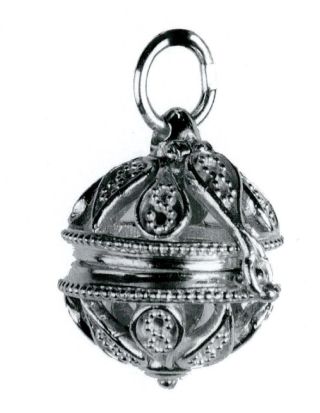
Protected works include a jewelry box, ashtray, piggy bank, tea set, corkscrew, pair of shoes, humanoid robot, and drumstick bag. Congratulations!
When a movement speaks louder than words
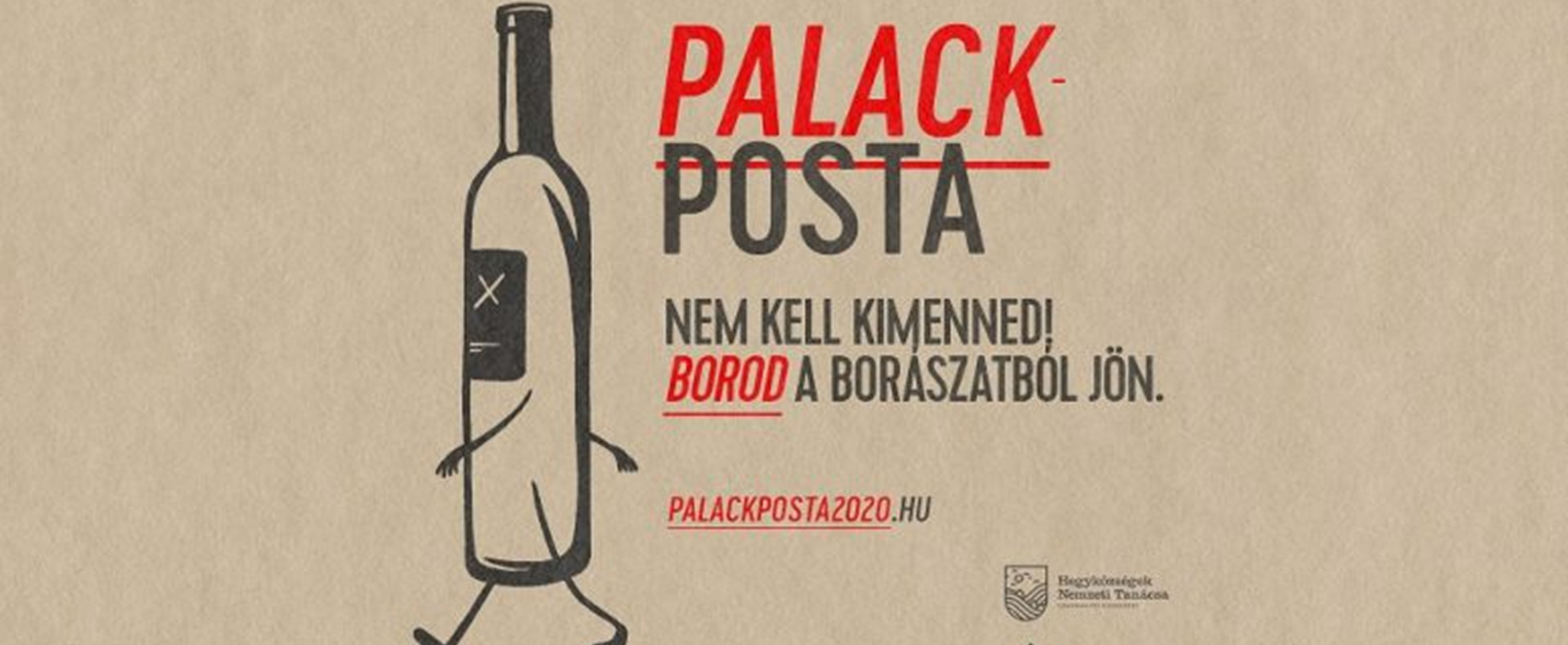
Not every message can be expressed effectively through language alone. It may be the adventurous journey of a wine bottle reaching the consumer, or the articulation of a career-defining decision. The world of motion trademarks is all about conveying these subtle yet powerful messages.
This type of trademark is defined by the movement or displacement of its constituent elements. It can be a video, but it can also be a sequence of still images whose changes and order carry meaning.
The joint campaign of the National Council of Wine Communities and the Agricultural Marketing Center, Palackposta (Message in a Bottle), aims to promote the craftsmanship of winemakers, the beneficial effects of quality wine, and cross-border online ordering. The message of Profession, with the logo’s dynamic motion, captures the dynamism of human decision-making, the processes of searching, changing, and advancing, in a form unique even among trademarks.
Outstanding Hungarian Engineers – Jedlik, Bánki, Ganz
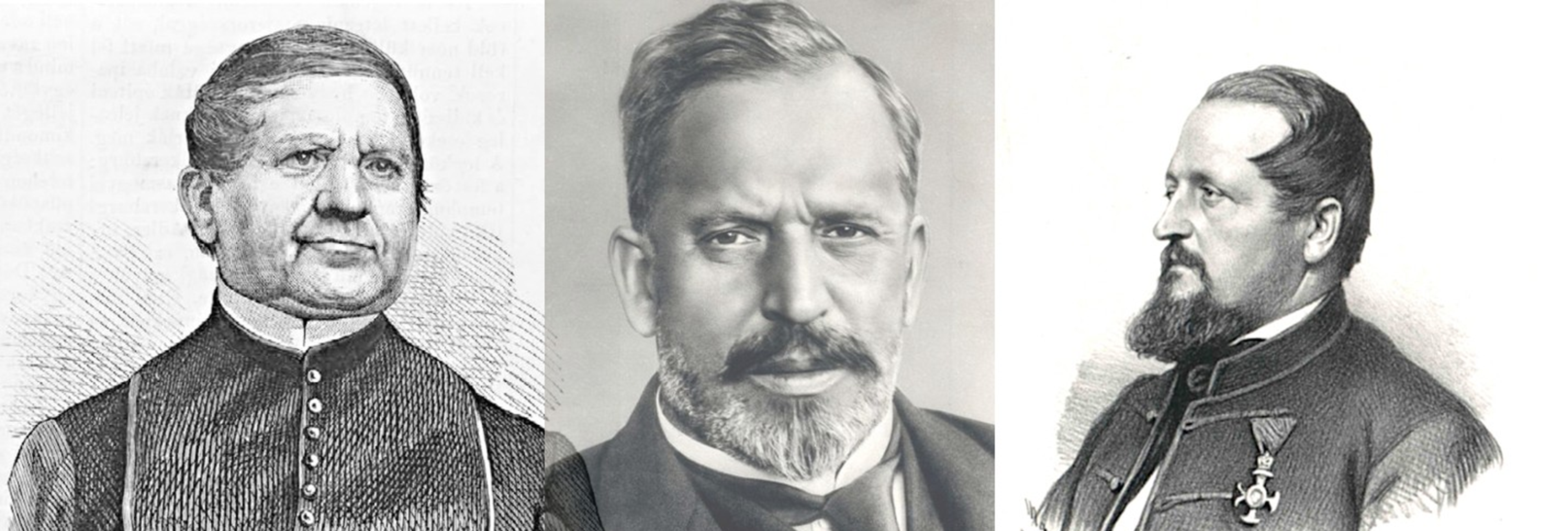
The history of Hungarian industry and innovation has been shaped by remarkable inventors and engineers, whose legacy still defines Hungarian technical thinking and engineering culture today.
Ányos Jedlik, the creator of the dynamo principle and an early developer of the electric motor, made a fundamental contribution to the advancement of electrical science. He laid the foundations for domestic carbonated water production and authored the first Hungarian-language physics textbook, The Physics of Heavy Bodies.
Donát Bánki, as a mechanical engineer, revolutionized the vehicle and engine technology of his era. He is credited with developing one of the first versions of the carburetor and advancing the Bánki–Csonka engine.
Ábrahám Ganz was one of the most significant industrialists of the 19th century. His foundry work and the invention of the chilled cast railway wheel revolutionized the European railway industry and established the global reputation of the Ganz Factory.

Hungarian Inventions in Our Daily Lives
Despite technological advancements that sometimes seem almost incomprehensible, we use the achievements of Hungarian inventors every day, demonstrating the power of Hungarian creativity worldwide. Consider, for example, vitamin C supplements, which Albert Szent-Györgyi was the first to isolate in large quantities, revolutionizing medical and nutritional science. Equally iconic is the ballpoint pen, developed by László József Bíró, which remains the world’s most widespread traditional writing instrument.
Ányos Jedlik developed the method for the industrial production of soda water, a creation that later became a distinctive symbol of Hungarian hospitality. The world of play was completely transformed by the Rubik’s Cube, which is not only a logic puzzle but has also served as a basis for scientific research in mathematics, physics, and psychology and over time, it has grown into a cultural icon.

Hungarians in the World of Computing
Hungary holds a prominent place in the history of computing.
The foundational principles of computing, associated with János Neumann and known as the Von Neumann architecture, include the use of the binary number system, the storage of memory and programs, and the design of instruction sets.
János Kemény participated in the development of the first time-sharing computer system, which significantly increased processor utilization. He is also credited with co-creating the BASIC programming language.
Rezső Tarján and László Kalmár were pioneers of Hungarian cybernetics. Through their achievements in logic and machine computation, and with the creation of the M–3 computer, they played a decisive role in the birth of Hungarian informatics.
Marcell Jánosi became known as the inventor of the microfloppy, a floppy disk with a centralized hub, and he also played a significant role in advancing domestic tape recorder manufacturing.

Health Packed into Products – Brands in the Service of a Conscious Lifestyle
Hungarian health-conscious brands support consumers every day in protecting their well-being with outstanding-quality products. At the same time, they are highly aware of the importance of safeguarding their intellectual property. Through trademark protection, they preserve brand reputation and ensure the possibility of taking action against counterfeiters.
Hester’s Life granolas transform rushed mornings into healthy ones, linking naturalness with modern dietary habits. One of the best-known players in sports nutrition, BioTechUSA, aims to support those who want to stay active through efficiency-driven solutions and transparent product composition. For generations, Béres has represented the importance of prevention and health maintenance. Today, its name is synonymous with scientifically grounded yet easily accessible and straightforward solutions.
According to Wise Tree Naturals, the most effective support for the body lies in the right proportions. Therefore, the company is committed to producing uniquely formulated products, manufactured with effect-enhancing methods that promote a balanced daily routine. The clean, additive-free dietary supplements of GAL and Anybody provide precisely what is essential for vitality. Abonett makes health-conscious nutrition easier by rethinking traditional bread, while activé fibershake supports the balance of our internal processes by ensuring practical fiber intake.

Fashion and Intellectual Property Protection
Fashion changes rapidly, and sometimes designers copy each other’s work. The results of a fashion company’s creativity can only become valuable through deliberate protection.
These brands know how to succeed with the help of trademarks, design protection, trade secrets, and copyright:
Mitter Sisters: Their handbag collections are characterized by clean lines, fine details, and wearability. They can serve as essential pieces for a capsule wardrobe.
REKAVAGO: Known internationally, it excels in minimalist, modern design with luxurious materials.
Nanushka: Recognized worldwide, Nanushka’s style blends bohemian minimalism with sustainability, featuring vegan leather garments, knit sets, and loose yet refined cuts.
Elysian: This luxury brand focuses on romantic, dramatic, and feminine aesthetics, often using rich textures, unique materials, and striking cuts.

How Among Sharks Participants Protect Their Ideas
Since its launch in 2019, the show has helped turn the dreams of many entrepreneurs into reality. Premier Padel, which has created the country’s leading padel community; qodoo.io, a quality management application based on blockchain technology and artificial intelligence; Mate Manus, offering natural coffee alternatives; The Lollipop Manufactory, which sparked a handcrafted confectionery revolution; Marokbaba, a nervous system–development toy built on the principles of attachment parenting; and PulóWear, the creator of wearable blankets, have all recognized that protecting innovation is just as important as securing a good investment. Through trademark protection and voluntary registration of works, they safeguard their brands against infringers. Some participants in the show have developed entirely new technologies and methodologies.
Among them is TSMT movement therapy, also protected by trademark rights, which supports the maturation of the nervous system through planned development. Another example is Tetőhűtés, which since 2017 has held the patent for an environmentally friendlier method of cooling flat-roof industrial halls, as well as for its evaporative cooling equipment.

Public Domain in Architecture
This year is particularly significant for the relationship between architecture and copyright because the life’s work of Alfréd Hajós (1878–1955) has entered the public domain under copyright law (copyright protection lasts for the author’s lifetime plus seventy years after their death). Hajós, the first Hungarian Olympic champion, was also a recognized architect. His name is associated with, among other projects, the design of the Aranybika Hotel in Debrecen and the predecessor of the National Sports Swimming Pool, as well as numerous sports facility concepts. Thanks to Hajós’ athlete’s perspective, his designs fully met the needs of sportspeople.
Also in 1955, Kálmán Kőrössy (born Albert Neumann, 1869–1955) passed away, a prominent figure of Hungarian Secessionist architecture. He designed the building known as the Tündérpalota (Fairy Palace), home to the National Pedagogical Library and Museum, as well as the Kölcsey Ferenc High School in Budapest’s VI District.
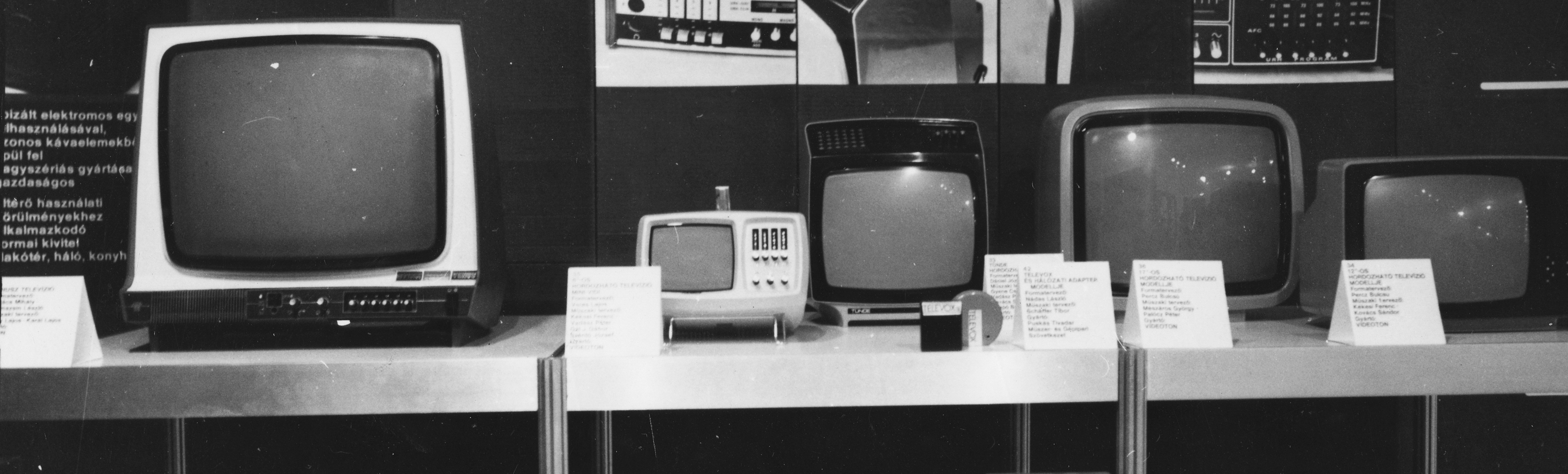
Iconic and Hungarian – Telecommunications Brands: Videoton and Orion
"Pocket radio, I always listen, to hear my song..." - went the hit from the mid-1960s, featuring products from Orion and
The history of Videoton dates back to 1938, when the Vadásztöltény, Gyutacs- és Fémárugyár Részvénytársaság (Hunting Cartridge, Primer and Metal Products Joint-Stock Company) was founded, producing mainly radios, televisions, speakers, and computing devices. Videoton, two defining companies of Hungarian telecommunications.
The predecessor of the Orion brand was the Hungarian Wolframlámpagyár (Wolfram Lamp Factory), founded in 1913 by János Kremeneczky. From the 1920s, it became a key player in the Hungarian electronics industry under the name Orion, and by the mid-1950s, it had become a pioneer of Hungarian television production.
Their pop-cultural influence endures: their retro designs inspire fashion trends, vintage versions of their products are highly sought-after, and they remain symbols of the technological identity of the socialist era.
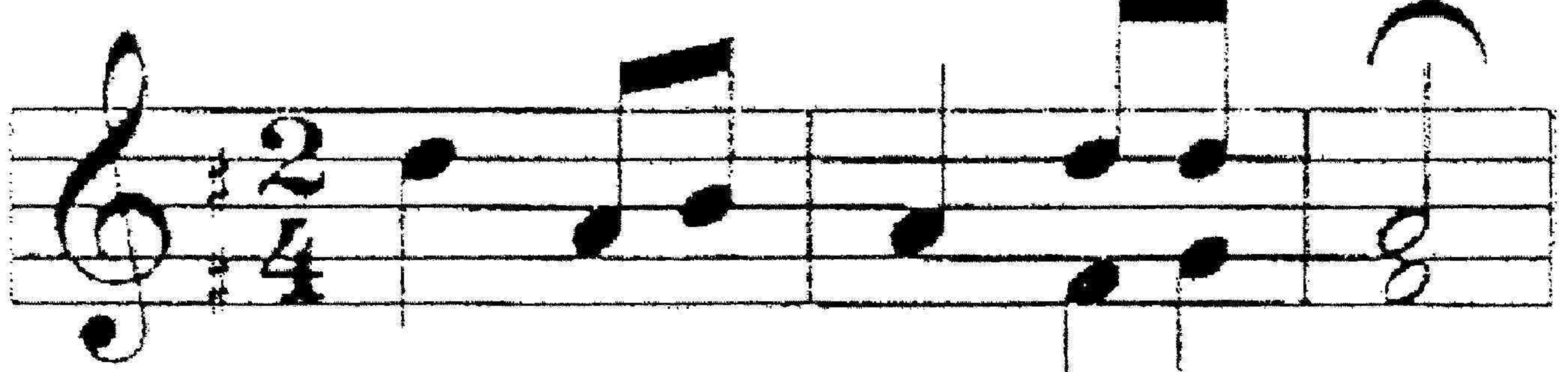
Let the Trademark Sound Out Loud!
We may not always realize the power a melody or harmony can hold, since our world is primarily built on visual cues. We become truly aware of it when the familiar jingle of the old Kossuth or Petőfi radio plays, or when we instinctively recall an advertisement tune from 30 years ago.
This is exactly the purpose of a sound trademark: a distinctive sign made up of sounds or combinations of sounds that can differentiate products or services. There are not many of them, but the MÁV (Hungarian State Railways) melody is probably imprinted in everyone’s memory. The short melody was composed not by a professional composer, but by Tamás Székely, head of MÁV’s radio technology department, in 1971 and these few notes are still protected today.
Other examples of sound trademarks include Praktiker’s “Mindenre van kész ötlete” (Praktiker has a ready solution for everything) jingle and a melody registered by Fundamenta-Lakáskassza Zrt. (Fundamenta Home Savings Bank Ltd.).

Sustainable, Innovative Development
Hungarian companies contributing to CO₂ reduction through innovations in their products, packaging, and delivery:
Piszke The founding and longest-standing member, Magyar Piszke Papír Kft. (Hungarian Piszke Paper Ltd.), has operated in the Hungarian household paper market for nearly 30 years.
ne pazarolj („do not waste”) A zero-waste store, café, and webshop that operates without generating waste, offering products that help customers lead greener daily lives.
Munch A Hungarian innovation that has revolutionized the fight against food waste in a simple, digital way. The platform aims to ensure that edible food reaches consumers instead of ending up in the trash.
MOL Bubi MOL Bubi is BKK’s (Budapest Transportation Center) community bike-sharing service for eco-conscious urban transport. Over the past four and a half years, passengers have completed 14 million trips, covering 28 million kilometers on these green bikes.
Such a beautiful life!
At first glance, the worlds of entertainment, games, sport, and the arts may seem far removed from the systems of intellectual property protection, yet in reality, this is one of their most vibrant and story-rich arenas. Here we discover how a board game becomes a global phenomenon, which IP solutions safeguard the symbols of the Olympic Games, and how film, publishing, and music are reshaped by emerging technologies. In this section, we reveal how the joy of creativity connects with intellectual property, and how much lies behind the scenes of our favourite films, the books on our shelves, and the sporting events we love. Because life truly is beautiful, especially when we understand the ideas that set it in motion.

Classic Hungarian Flavors
In January 1953, 12 farmers from Gyermely founded a cooperative. In the 1970s, construction of a pasta factory began, and today Gyermelyi is the country’s largest egg producer and market-leading pasta manufacturer.
Mogyi started in 1990 with just five employees; today it has 750 employees in more than 30 countries. Its three main production sites are Medgyesegyháza, Csávoly, and Baja. Continuous innovation is at the heart of its activities, with a focus on balanced diets, healthy lifestyles, modern technology, and excellent quality. The company also supports numerous national and local organizations.
The Kecskemét Farmers’ Cooperative was founded in 1948. From this grew the Univer Group, which has several members. It specializes in producing and marketing food seasonings and other food products. Piros Arany and Erős Pista have been part of the Hungarikum Collection since 2016.
All three companies and groups are 100% Hungarian-owned.

Hungarian Chocolate
Macskanyelv. Melba. Boci. One iconic name is enough to bring the flavor to mind. From Artúr Gombóc (a lovable, round, and endlessly chocolate-obsessed character from a classic Hungarian children’s cartoon), we know there are round, square, flat, solid—and even bubbly chocolate-varieties!
At the end of the 1800s, one group of patents aimed to make medicines more palatable with chocolate, and there were also efforts to produce wine chocolate. Among the many innovative ideas, the method for making bubbly chocolate, registered in 1939, stood out. This process gives the chocolate “cell-like, easily visible openings.”
Hungarian chocolate manufacturing has a long tradition. Stühmer Frigyes’ Tibi and Balaton trademarks have been around for 90 years. The Szerencs Chocolate Factory started production in 1923 and the Szerencsi Bonbon Ltd. has registered more than 60 IP protections. Several well-known Hungarian chocolate trademarks have recently returned to domestic ownership: Cerbona acquired the Boci, Melba, and Párizsi kocka trademarks from Nestlé.

Delicious Hungarian Beer
Hungarian experts have been (and still are) fascinated by the secret of good beer for centuries. The HIPO (Hungarian Intellectual Property Office) e-register contains countless trademarks and patents related to beer.
For example, there is Czeiszing and Mika Company’s 1894 patent for beer-dispensing device (beer pump), or chemist Dr. Ludwig Braun’s 1912 patent for producing lager beer. And since progress never stops, there’s also György Pintz’s 2020 patent for preparing home-brewed beer in single portions. Narrowing the search to the word “Dreher,” we still find 111 results!
Is there a Hungarian who wouldn’t recognize the slogans “What’s inside really counts” or “A reward at the end of the day”?
It’s good to know that in the Dreher logo, the white triangle within the red circle symbolizes water, malt, and hops.
Today, the Dreher Breweries still operate in the same area where the First Brewery of Kőbánya was established in 1854. Production has continued uninterrupted ever since. Antal Dreher Sr. took over in 1862, followed by his son, Antal Dreher Jr., and later his grandson, Jenő Dreher, building a company that produced excellent-quality beer while continuously evolving—a brewery where tradition was boldly combined with innovation and sustainable development.

Fine Wines of Hungary
There are products that have special characteristics and distinctive features due to their place of origin or other factors. Geographical indications are used to designate and identify products associated with a specific geographic area.
Products from traditional wine regions enjoy protection across the entire EU. Designations such as Tokaji wine or Egri Bikavér contribute to the image of the country of origin and add market value.
Hungary, geographical indications such as Balatoni, Dunántúli, and Zempléni (PGI), and designations of origin such as Badacsonyi, Etyeki, Mátrai, Somlói, Móri, Tokaji, Villányi, Kunsági, Szekszárdi, and Egri are in force. The latter is unique in that it is a hologram.

Music and Ingenuity
Musician and inventor? It’s not such a rare combination! In recent years, numerous exciting musical inventions have come to life.
Gergely Bogányi’s concert piano is remarkable both in its material and sound. Roland Szentpáli, the creator of the Twoba, combines the deep, full sound of the tuba with the mobility and virtuosity of the trombone. The Ceflute flute head, an invention by Zoltán Lakat and Tamás Horváth, is a unique, innovative flute headpiece, significant primarily for tone production and sound quality.
The music cylinder designed by Rebeka Rechner, Dr. Péter György Horváth, and Antal Labozár has a distinctive, playful form and is under design protection.
Sándor Mester’s invention, Digimpro, is a digital music improvisation technology capable of performing musical works in thousands of possible variations, generating unique versions and opening up new artistic possibilities in both music creation and listening.

Soft drinks going hard
The forms, colors, and flavors that ruled decades ago are slow to fade from consumers’ memories. It’s clear they still hold significant business potential evidenced by the fact that these iconic brands somehow refuse to disappear from store shelves.
Brands like Márka, Bambi, and Traubisoda are all soft drinks that remain protected today, primarily through trademarks.
At the same time, there is an emerging, new-generation wave in the category, where founders are revitalizing the Hungarian soft drink scene with fresh ideas, flavors, and innovations. Examples include the internationally recognized Hell Energy and Cseles Drink, which not only serve the domestic market but are already expanding abroad. Cseles Drink, in particular, created the concept of the so-called “adult syrup.”
Other notable examples include the cola-style Tikkadt Szöcske, Keselyű tonic, and Békanő lemonades, all of which elevate Hungarian soft drink culture to new levels while also paying close attention to intellectual property protection.

Zsolnay – Consciousness in Intellectual Property Protection
The Zsolnay Porcelain Manufactory is one of Hungary’s most renowned and significant applied arts workshops. It was founded in 1853 in Pécs by Vilmos Zsolnay and quickly gained worldwide fame thanks to its unique technical innovations and artistically sophisticated products.
The factory’s greatest innovation was eosin-glazed porcelain, which gave decorative objects and ceramics a unique appearance with its metallic, iridescent surface. Zsolnay also played a significant role in spreading Art Nouveau in Hungary, producing numerous architectural decorative ceramics.
Today, Zsolnay ceramics remain an important part of Hungary’s cultural heritage, found in museums, public buildings, and private collections. The brand name has become synonymous with quality and artistic excellence.
The founder consciously protected his inventions, holding multiple patents, and today the Zsolnay brand is still associated with numerous active trademarks.

Coffee Wizards
Ferencz Illy – a Hungarian-born entrepreneur and the visionary behind Italian espresso – was born in 1892 in Temesvár and passed away 70 years ago, on October 22, 1956.
In the early 1920s, he traded coffee and cocoa in Trieste. To simplify transport, he developed vacuum packaging that preserved the aroma of roasted coffee. He founded Illycaffè in 1933 and, in 1935, patented the precursor to the modern espresso machine, the Illetta, which operated using hot steam.
Other notable patents appeared from the 1940s onward, such as the “Coffee Maker Combined with a Coffee Grinder” (1947, Manóné Wolf) or the “Electrically Operated Roasting and Drying Device, Mainly for Roasting Coffee” (1957, Teofil Szász), but none match the significance of Ferencz Illy. His vacuum-sealed metal cans represented the alpha and omega of the technology, and the Illy company remains in the hands of his third-generation descendants to this day.

Hungarian Foods – Geographical Indications
Szegedi paprika, Gyulai sausage, Makó onions, Nagykun rice, Őrség pumpkin seed oil, Etyek sparkling wine.
There are products that have special characteristics and distinctive features due to their place of origin or other factors. Geographical indications are used to designate products associated with a specific geographic area.
These designations not only contribute to shaping the image of the country of origin, but also create substantial added market value through the protection they provide in the form of collective rights.
Regulating their use ensures the protection of the names of Hungarian agricultural, viticultural, and wine products, as well as spirits, and artisanal and industrial products, in all EU member states. Geographical indications carry important meaning: they represent tradition, the producer community, distinctive product characteristics, and quality standards.

Hungarian Sweet Tooths
In 1906, József C. Dobos voluntarily handed over the recipe for the Dobos cake to the Budapest Confectioners and Gingerbread Makers Guild, allowing any pastry chef to make it.
Since 2017, the classic Dobos cake recipe has been officially protected. It features a round shape with five layers of sponge cake alternating with chocolate buttercream, topped with a caramel layer.
In 1896, the wife of Belgian Prince Chimay fell in love with a Hungarian violinist. János Rigó and Clara Ward became celebrities of their time with their scandalous affair. A clever pastry chef named a dessert after Rigó Jancsi, riding the wave of one of the hottest gossip stories of the era with this smart marketing move.
In 1940, the banquet for Márai’s play was held at the famous Gundel Restaurant. His wife, Lola Matzner, brought the family’s favorite dessert for the dinner. The chocolate pancake filled with walnuts, raisins, and orange peel delighted Károly Gundel so much that he added it to the menu as the “Gundel pancake.”

Hungarian Oscars
We can easily list Hungarian Oscar-winning artists; László Nemes, István Szabó, Vilmos Zsigmond, and Mihály Kertész (Michael Curtiz) quickly come to mind.
Here are a few lesser-known but equally noteworthy names:Miklós Rózsa composed over one hundred film scores, three of which won Oscars: Spellbound (1946), The Dark Mirror (1948), and Ben-Hur (1960)!
In the Best Art Direction (now Production Design) category, several Hungarian-born artists have also been honored:Zsuzsanna Sipos (shared with Patrice Vermette) for her work on Dune in 2022. Sándor Tauner in 1961 for the set design of Room at the Top. Vilmos Béla Sándorházi (William S. Darling) won Oscars for three films: Cavalcade (1933), The Song of Bernadette (1943), and Anna and the King of Siam (1946). Ship of Fools (1965) received multiple Oscars, including one for Joseph Kish for Best Art Direction and one for Ernest László as Best Black-and-White Cinematographer.

Everyone’s Favorite: The Legendary Túró Rudi
Túró Rudi is not just a sweet treat, it is an iconic part of everyday life in Hungary, present in people’s lives for generations.
Introduced to the market in 1968, Túró Rudi was developed by the Budapesti Tejipari Vállalat (Budapest Dairy Company), inspired by Soviet products. The name “túró rudi” (approx. cottage cheese bar) was chosen through a contest, and although the new product was initially divisive, it quickly became popular, especially among children.
After the political transition in Hungary, the curd-filled chocolate bar appeared in several variations, with different flavors and produced by multiple manufacturers. The best-known brand to this day is Pöttyös (meaning dotty), recognized for its distinctive dotty packaging.
The designation “túró rudi” is exclusively owned by FrieslandCampina and Sole-Mizo, meaning it cannot be used for chocolate-coated, cylindrical curd desserts without their permission. Competitors, therefore, must be creative when naming their own products.
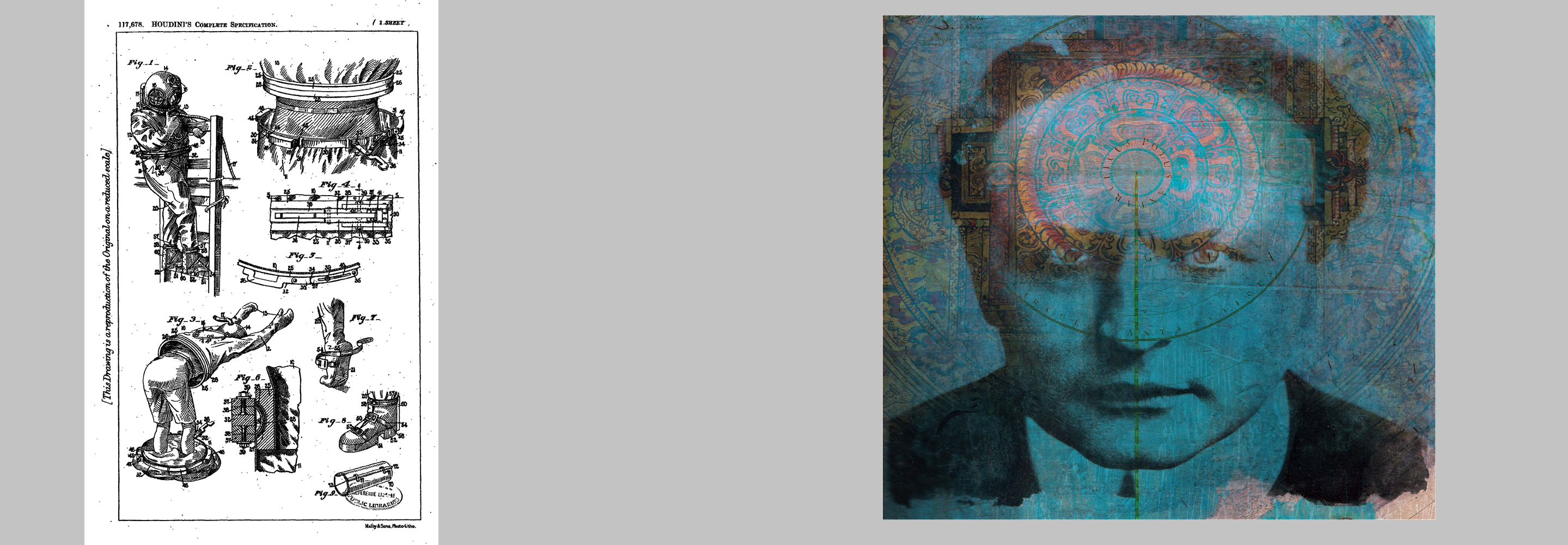
Harry Houdini, the Legendary Illusionist and Escape Artist
Harry Houdini was born as Erik Weisz in Budapest in March 1874, and as a young child, he emigrated with his family (his parents and six siblings) to the United States.
His work had a significant impact on American show business: he transformed stage illusions into spectacular mass experiences and created the concept of the star illusionist, where the performer’s persona was just as important as the tricks themselves. Houdini incorporated technical innovations into his performances, patented one of his inventions, and protected the themes of his shows through copyright, demonstrating a highly conscious approach to intellectual property protection.
Houdini remains a living pop-cultural icon: his image appears in films, music, and video games. Actors of Hungarian descent, such as Tony Curtis and Adrien Brody, have portrayed him, while performers like Eminem and Dua Lipa reference him in their songs. Thanks to his iconic status, Houdini has become a kind of brand, continuously reinterpreted and expanded by the media even today.

Geographical Indications and Handicraft Products
The designation of handicraft and industrial products with a geographical indications is particularly important, as it ensures the preservation and development of cultural heritage and traditional expertise. The designation also helps both producers and consumers to recognize authentic products.
Herend Porcelain is part of Hungary’s national heritage. The workshop was established in Herend in 1826, and since 1839, only high-quality porcelain has been produced there, by hand..
The first glassworks, the predecessor of today’s Hollóházi Porcelain Manufactory was built on the Károlyi family’s estate. It was the predecessor of today has been in continuous operation since 1777.
Lace from Hövej features stitches such as drawn-thread embroidery, chain stitch, flat stitch, and loop stitch. It has been protected as a geographical indication since 2010,.
Each year, new motifs enrich the 110-year-old Halas lace thus combining tradition with contemporary values. It is a Hungarian specialty (Hungarikum), and the secrets of its craftsmanship are known only to a select few.

The Heavyweights of Hungarian Animation
Béla Ternovszky, a film director, gained international recognition with Cat City (Macskafogó), but his name is also associated with several episodes of The Mézga Family, Next, Please! (Kérem a következőt!), Gustav, and Pumuckl. He also worked as the movement designer for Johnny Corncob (János vitéz).
József Nepp was not only a renowned animator but also a composer; however, he became best known for his wonderful screenplays, including Mattie the Goose-Boy (Lúdas Matyi), Szaffi, and Willy the Sparrow (Vili a veréb).
Attila Dargay directed beloved classics such as Vuk (The Little Fox) and Captain of the Forest (Az erdő kapitánya). We should also remember his illustrations for storybooks, he created the charming characters of The Turk and the Cows (A török és a tehenek) and Please, Sir! (Tanár úr, kérem).
One of Marcell Jankovics’s iconic series (as designer and expert) was Hungarian Folk Tales, of which 100 episodes were produced. As a director, two of his major animated films include Son of the White Mare (Fehérlófia) and Johnny Corncob (János vitéz).
Gábor Csupó, an Emmy Award–winning animation filmmaker, is best known for The Simpsons and Rugrats.

Pen and Law: Mór Jókai at the Birth of Hungarian Copyright
Mór Jókai was one of the most outstanding figures of Hungarian literature, a true “prince of writers,” whose novels were bestsellers even in his own time. Empress Sisi herself was an enthusiastic reader of his works.
Few people know that Jókai also practiced as a lawyer and later took part in shaping public life as a Member of Parliament. However, he was not only active in literature and politics but also played a significant role in the history of Hungarian copyright law. He witnessed - and helped shape - the creation of the first comprehensive Hungarian copyright regulation: he participated in the adoption of the 1884 Copyright Act, associated with István Apáthy.
At Jókai’s suggestion, the law included a 50-year term of protection after the author’s death. He argued for this provision by pointing to the vulnerable position of Hungarian authors and the difficulties surrounding publishing at the time.
The 1884 Act also established the legal basis for the creation of the Copyright Expert Committee, whose first president was Mór Jókai himself. Among the members of the body were prominent creators and experts such as Alajos Hauszmann, Béla Bartók, and Zoltán Kodály. Today, the organization continues to operate under the name Copyright Expert Board.

The Most Translated Hungarian Literary Works
One measure of a book’s global literary success is the number of copies sold and the number of languages into which it has been translated. Imre Madách’s The Tragedy of Man has been translated into 40 languages, while Ferenc Molnár’s The Paul Street Boys has appeared in 33 languages.
On Wikipedia’s list of literary works by number of translations, The Paul Street Boys ranks 100th, while The Tragedy of Man holds the 79th position.
The list features many children’s classics (for example, second place after the Bible) is The Little Prince, third is Pinocchio, and among the top fifty are Winnie-the-Pooh, The Lord of the Rings, and Harry Potter. An interesting fact is that on this list, The Paul Street Boys ranks ahead of Gone with the Wind, Les Misérables, and Bambi.
According to international statistics on book translations, Hungarian is the 19th most common source language. The most frequently translated Hungarian authors are Imre Kertész, Sándor Márai, and Péter Esterházy.

A Hungarian-USA Copyright Case
Gábor Presser is an indispensable figure in Hungarian music. Over a career spanning more than five decades, he has enriched Hungarian culture with enduring works. As a founding member of Locomotiv GT and as the musical director of the Vígszínház (Comedy Theatre of Budapest), he has had a defining influence on Hungary’s musical life. Presser’s compositions form an integral part of Hungarian musical identity.
His genius has inspired other artists as well. The famous Omega song Gyöngyhajú lány (The Girl with Pearly Hair), written by Anna Adamis and Gábor Presser, was adapted in 1995 by the Scorpions under the title White Dove, with permission. In 2013, a fragment of the song appeared in Kanye West’s track New Slaves, where János Kóbor’s voice can also be heard. However, the rapper used the musical work without authorization. The rights holders turned to the courts, and the case ultimately ended in a settlement: Kanye West acknowledged the infringement, and a lump-sum agreement was reached to compensate for the unpaid royalties.

Hungarians in Hollywood
The influence of Hungarian filmmakers on the film industry across generations is undeniable. Here are just a few names among the giants of cinema:
Adolph Zukor and Vilmos Fried (whose parents later changed the family name to Fox) both arrived in America from Borsod County and, by the early 1900s, were already heading their own Hollywood empires. Zukor founded Paramount Pictures, while Fox established 20th Century Fox.
Joe Pasternak worked with Gene Kelly and Judy Garland, major stars of the golden age of musicals.
Béla Lugosi became a star in horror films; his portrayal of Dracula in 1931 defined the character for generations, setting a standard that countless actors sought to imitate.
László Kovács was one of the most prominent Hungarian cinematographers in Hollywood; he shot Easy Rider and Ghostbusters, among many other films.
Andy Vajna produced Rambo, which at the time became the highest-grossing independent film made in America. His credits also include Evita, Red Heat, and The Terminator.
Unbreakable Spirits
Creativity is not a privilege but an innate human force - and sometimes it shines brightest in those who begin at a disadvantage. In this section, we share the stories of creators, inventors, and innovators who, starting from extraordinary circumstances, living with disabilities, or overcoming difficult life situations, have created something truly lasting. We also highlight those driven by a desire to heal, to make life easier, and to bridge challenging moments through ingenuity and care. What we aim to show is that creative energy takes many forms, yet it shares a common foundation: perseverance, originality, and the conscious use of intellectual property can open new possibilities. Because extraordinary ability is not always visible - but it is always inspiring.

Difficult Beginnings – Outstanding Achievements
Three scholars of Roma origin whose life paths demonstrate that talent and perseverance can break through barriers that may seem insurmountable to many. Their example is a source of strength for us all.
Dr. József Horváth researches the early diagnosis of oral cancer, among other topics, at the University of Debrecen. Dr. Krisztián Kocsis is a neurobiologist and brain researcher at the University of Szeged. Dr. Zsuzsanna Orsós is an assistant professor at the University of Pécs, focusing on health issues affecting the Roma population and on cancer research.
Their Roma heritage is not a taboo for them but an experience that makes them more sensitive to social injustices and lends authenticity to their voices on education, health, and equal opportunities. Their presence in the scientific and public sphere contributes to breaking down stereotypes and fostering a more diverse and just society.

Health and Healing – New Hungarian Innovations
When it comes to health, we can rely on Hungarian inventors. We can take pride in the following four recent, patent-protected innovations.
The WIWE mobile ECG device provides reassuring support for patients with heart conditions. This small diagnostic tool is capable of recording clinical-quality ECGs and evaluating them independently.
The UriSed mini semi-automatic urine microscopy analyzer is an efficient solution for laboratories and emergency departments. It is cost-effective and can perform up to 60 tests per hour.
The Kinepict imaging system, an angiography device, delivers improved vascular images at lower radiation doses. This invention is linked to development work at Semmelweis University.
The Dcont blood glucose monitoring systems assist in maintaining proper blood sugar levels. The patent holder is 77 Elektronika Ltd., a company with an extensive intellectual property portfolio.

Child-Friendly Inventions
We often imagine inventors working away in secret laboratories, experimenting with processes beyond our understanding. The good news is that innovation is much closer to everyday life than we think. Here are a few examples of Hungarian inventors striving to make life easier for the youngest among us: The Nosiboo nasal aspirator (invented by Zsolt Mátrabérci and Valter Streitmann) helps relieve children’s cold symptoms.
With the Magyarinda baby carrier, parents can go anywhere with their little one.
Thanks to MiniBrake, parents can remotely control and brake their child’s bicycle (developed by Dániel Bognár, Péter Szesztay, and Marcell Szirtes).
Dr. Gyula Dékány identified oligosaccharides found in breast milk. His findings contributed to the development of infant formulas that more closely resemble breast milk.
Finally, the inventor of the disposable diaper: György Dékány developed this baby-care product in 1940, making life easier for millions.

Inventions for People with Limited Mobility
György Lévay lost his right hand and part of his left arm as a result of severe meningitis. His personal loss motivated him to seek solutions for people living with limb deficiencies. His research work has focused, among other areas, on improving control methods for amputation prostheses. He has participated in various research projects, including the testing of “electronic skin” (e-dermis). Lévay’s example shows how personal physical challenges and lived experience can be transformed into an innovative engineering mission.
Low-Cost Robotics, associated with Alexa Zsófia Vas, is an initiative developing affordable robotic and prosthetic solutions produced through 3D printing. The project aims to offer easily repairable, customizable, and widely accessible alternatives to expensive bionic devices.

Hungarian Nobel Laureates before the 2000s
CHEMISTRY 1994 – György Oláh For his contributions to the chemistry of carbocations.
ECONOMICS 1994 – John Harsányi (shared) For pioneering analysis of equilibria in non-cooperative games.
PHYSICS 1971 – Dennis Gabor For the invention and development of the holographic method.
PHYSICS 1963 – Eugene Wigner For his contributions to the theory of atomic nuclei and elementary particles.
MEDICINE 1961 – George Békésy For discoveries concerning the physical mechanism of stimulation within the cochlea of the inner ear.
CHEMISTRY 1943 – George Hevesy For the application of radioactive isotopes as tracers
PHYSIOLOGY OR MEDICINE 1937 – Albert Szent-Györgyi For his discoveries related to biological combustion processes, with special reference to vitamin C. He is one of the Hungarians who had the greatest impact on the international scientific community and was the first to receive a Nobel Prize in the natural sciences for research conducted in Hungary.

Hungarian Nobel Laureates in the 2000s
LITERATURE 2025 – László Krasznahorkai For his visionary works that reveal the power of art amidst apocalyptic terror.
PHYSICS 2023 – Ferenc Krausz (shared) For methods to study the behavior of electrons in matter.
PHYSIOLOGY OR MEDICINE 2023 – Katalin Karikó (shared) For the development of medical technology based on synthetic mRNA vaccines. In 2020, based on her patent, the world’s first clinically proven, effective third-generation Pfizer-BioNTech COVID-19 vaccine was developed.
CHEMISTRY 2004 – Ferenc Herskó (shared) For the discovery of ubiquitin-mediated protein degradation.
LITERATURE 2002 – Imre Kertész For his writings that portray the fragile inner world of the individual against the barbaric arbitrariness of history.
A journey across time
Time travel is very much possible in the world of intellectual property: all it takes is looking back at the early version of an invention and comparing it with how we use it today. In this section, we trace how technologies and devices have evolved from their first experiments to their present-day forms. We explore how trademarks reinvent their visual identity decade by decade, and how earlier creations can gain entirely new interpretations over time. We also journey to designs that have remained virtually unchanged for a century: forms, products, and inventions that have stood the test of time, often thanks to strong IP protection and elegantly simple engineering thinking. This chapter reveals how humanity is able, at once, to preserve its creative heritage and continuously reimagine it.

180!!! - Hungarian Darts Innovations
The popularity of darts in Hungary has grown significantly compared to roughly ten years ago, when many still regarded it merely as a pub sport. Today, families, groups of friends, and fan clubs gather in front of their televisions to watch the world’s best players, or even attend festival-like events in person. The secret to darts’ success lies in its simplicity: all that is needed is a board, a few darts, and a suitable throwing area. Additionally, players are easy to relate to, as they do not have the typical physique of elite athletes.
Fewer people know that one of the biggest darts brands, Unicorn, has strong Hungarian ties. Its founder was Ferenc Löwy — later known as Frank Lowy — and the company has remained in the family ever since. The company’s success was built on the founder’s invention, the Silver Comet dart, which he patented in 1937 while living in England, after having worked at the Hungarian Patent Office in his younger years.
Another innovation in modern darts equipment and game systems was introduced by a Hungarian development team under the name Dartsee. Their invention not only allows automatic scorekeeping but also transforms the game into an interactive, community-oriented sports experience for everyone.
Caola – Across Generations
Amodent, Ovenall, Gabi, Lady Camea… every generation can surely recall a taste or scent: most of these beloved products still exist today, and the common thread connecting them all is Caola.
The story begins with master soap maker József Hutter and started in 1831, during Hungary’s Reform Era! The family business became a joint-stock company in 1906, and the catchy Caola name was adopted in 1918. Life went on, and after multiple factory mergers and splits, followed by post-regime-change privatizations and the expansion of multinational companies in Hungary, the brand underwent further radical transformations. With the loss and regaining of the brand name, along with several ownership changes, it would be fair to say that Caola seemed to be heading toward bankruptcy.
Fortunately, in 2020, a new investor stepped in, ensuring that the company remained Hungarian-owned. This gave the nearly 200-year-old Caola a fresh vision for the future—a brand where tradition meets innovation.
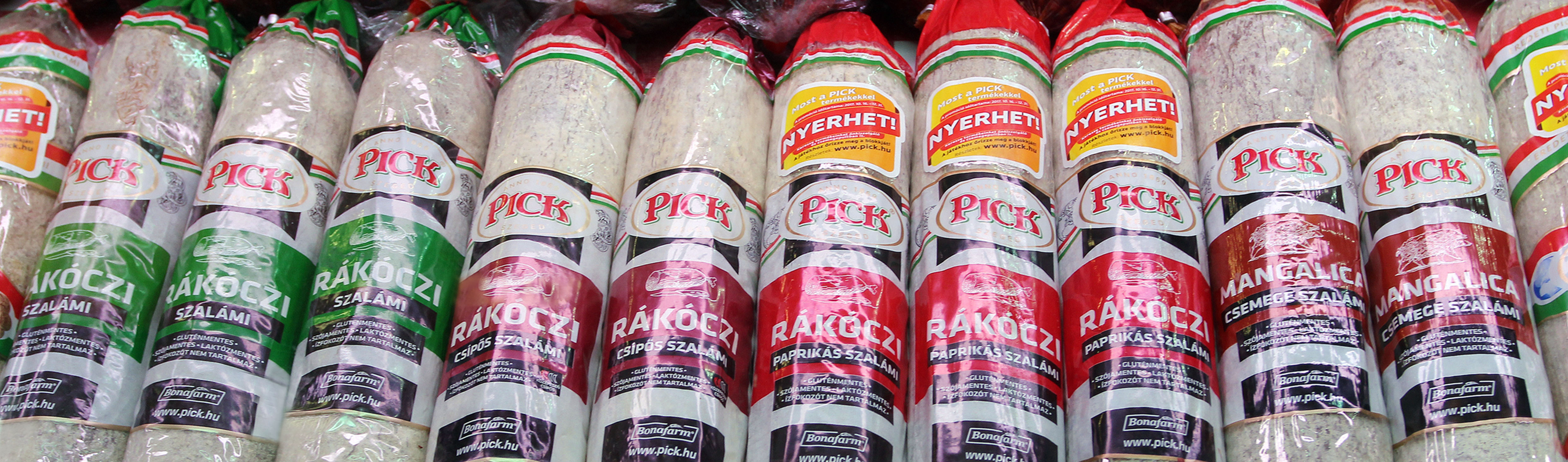
PICK: hungaricum from Szeged
In 1869, Márk Pick, a produce trader, applied for an industrial license, declaring his intention to operate a “commission-based produce business.” At first, salami was produced in small batches of a few quintals, but successes followed one after another, and by 1900, PICK salami had become a global brand.
During and after the major wars, the company was naturally inactive, but its revival was all the more spectacular. In the 1970s, a meat processing plant, a pig slaughterhouse, and a 63-meter-high salami curing tower were completed.
In 1993, the Scientific Committee on Animal Health of the European Community classified PICK salami as a “long-maturing product.” On the EU’s list of protected products, Szeged salami is first among 800 items; no other product in the world may be marketed under this name.
Pick Szeged Plc. is the only meat industry company that can boast two Hungarikums. In 2014, both PICK Winter Salami and HERZ Classic Winter Salami were officially recognized as Hungarikum.
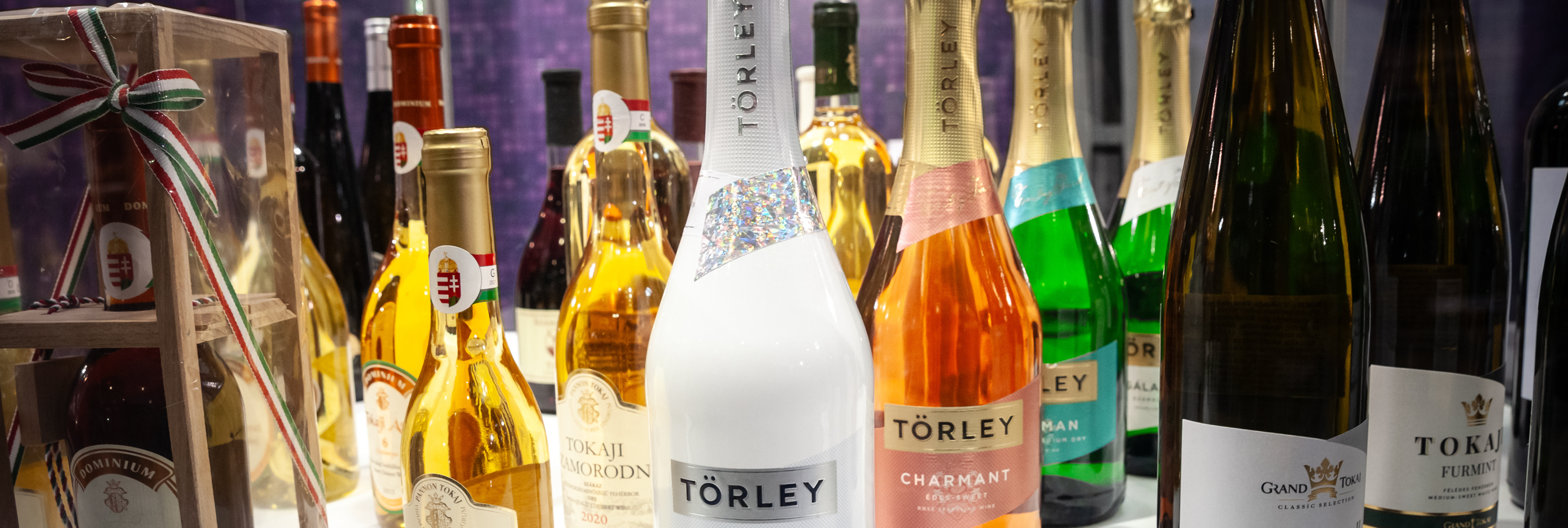
Nearly a century and a half of sparkling activity
On August 1, 1882, József Törley registered his company with the Budapest Company Court under the name “József Törley and Partner.” But he was not just an entrepreneur—he is remembered as a deliberate innovator as well: in August 1897, he filed a patent with the Hungarian Royal Patent Office, which “replaced manual shaking with a much faster, cheaper, and more consistent mechanical process.” The “Method and apparatus for removing sediment from alcoholic beverages” was one of the innovations that enabled the modern sparkling wine factory to produce two million bottles annually by 1910.
The storms of history did not spare the factory, and it barely survived until the 1950s. Production restarted in 1951, and Törley became the country’s only sparkling wine factory under the supervision of the Unicum Liqueur Factory.
For more than 20 years, it has operated as a corporate group and has maintained its market-leading position in Hungary.

Dr. Zwack, das ist ein Unicum!
The Unicum trademark was registered on May 22, 1883, under number 805-071, “to protect the herbal digestif marketed under the name Unicum.” The drink was made according to the Zwack family recipe dating back to 1790 - according to legend, the Habsburg ruler Joseph II exclaimed, “Dr. Zwack, that is an Unicum!” when his court physician offered him his homemade herbal liqueur.
In 1840, Unicum was registered as a commercial brand, and from the very beginning, it was sold in its original round bottle.
In 1892, production moved to Soroksári Street; the historic walls of No. 26 still house the latest herbal extraction and distillation technology.
The original Unicum recipe is kept in a safe, and even the production specialists know only part of it. The secret of Unicum’s core herbal mix has been guarded for over 230 years, now by the family’s sixth generation.

Chemistry in the household
Wood ash, laundry soap—who even uses that? Tomi first appeared in 1969 as a development of the Hungarian chemical company Caola. The product was specifically designed for Hungarian water quality and washing habits. This originally Hungarian detergent later became part of Henkel. And are no new Hungarian inventions being made today? On the contrary! Biobubi (founded by Balázs Háromfai and Boglárka Bálint) started as a garage business producing eco-friendly laundry detergents and today offers a much wider range of products. If you’re looking for laundry sheets developed and made in Hungary…
The Hungarian company Cycle also produces and markets cleaning detergents free from harmful additives, using technology protected by European patents - and, of course, with European trademarks.
HIPO
Patent Office, Patent Court, National Invention Office, Hungarian Patent Office, and finally the Hungarian Intellectual Property Office. Even the names themselves speak volumes, as they evoke exciting and dynamic decades that we can, here and now, recall only in outline. Yet even this is enough for a picture to emerge of an institution that has developed consistently, is internationally active, and always open to change. An Office whose every stage of development has been accompanied by tradition and continual renewal, and whose 130-year history is well worth remembering.
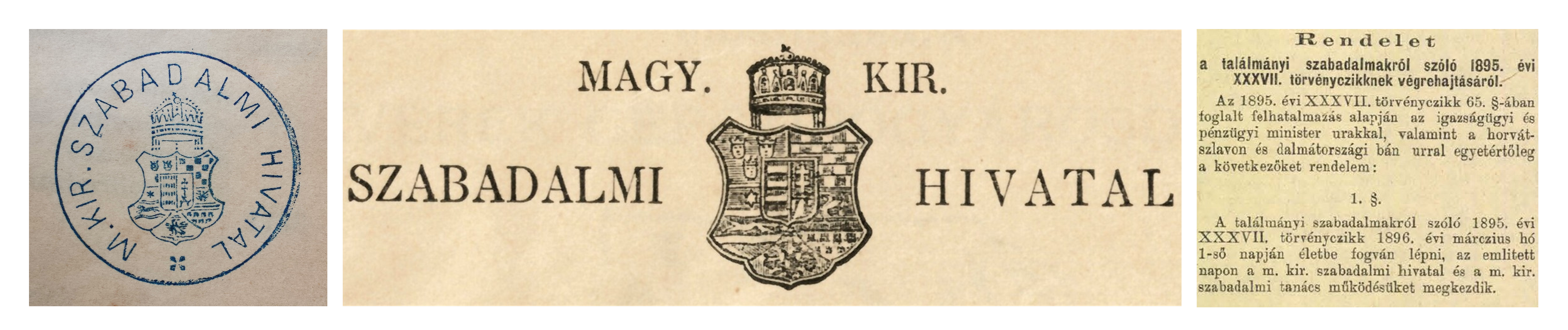
The Birth of the Office
On March 1, 1896, the Royal Hungarian Patent Office was established, consisting of a president, a vice-president, permanent judicial and technical members, as well as non-permanent judicial and technical members. The president, vice-president, and permanent members were appointed by the ruler, later by the governor, based on the recommendation of the Minister of Commerce, while the administrative staff was appointed by the minister.
Judicial members were required to have legal qualifications, whereas technical members had to possess a diploma obtained from the Royal Joseph Technical University or one recognized through this institution, completed in the proper manner at any technical university. The president of the office played a decisive role in its operation, not only directing but actually managing the organization: he assigned members to various departments and councils, decided on case assignments, exercised employer rights, and presided over the judicial section.
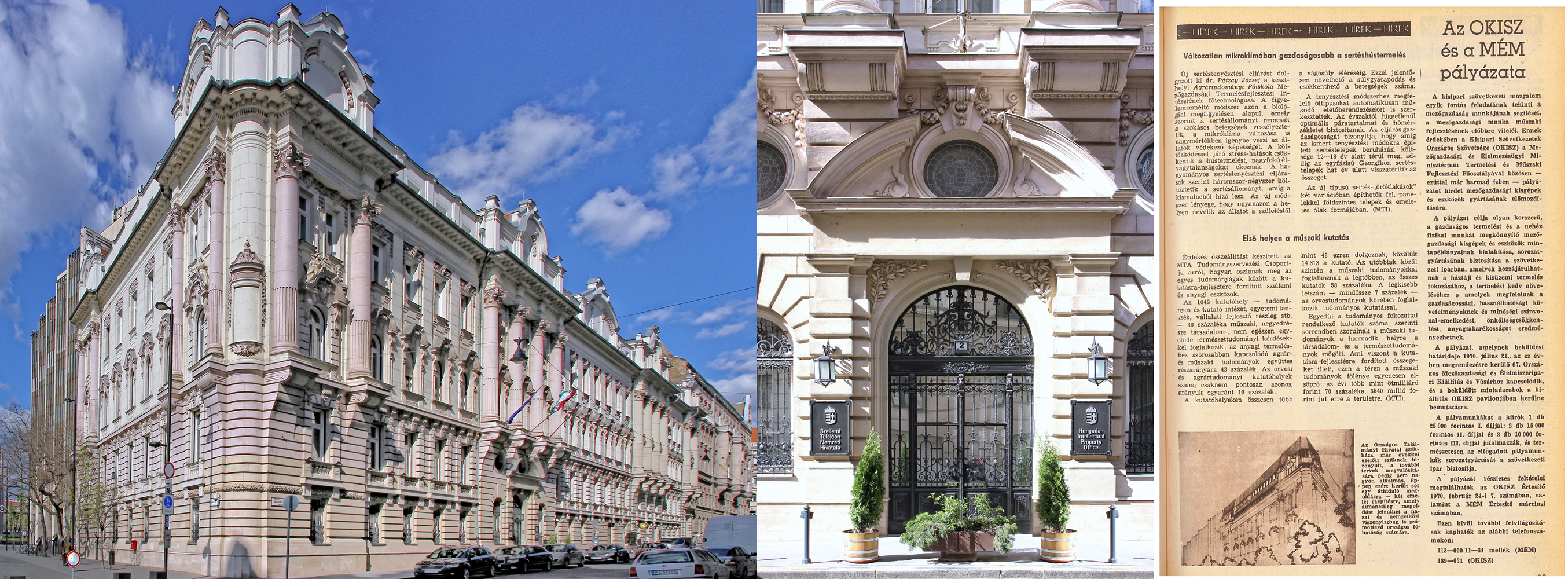
The headquarters at 2 Garibaldi Street
A few years after its establishment, in 1952, the National Office of Inventions moved to a new headquarters. The impressive corner building had previously been constructed based on the designs of architect József Hubert for the National Land Credit Institute for Small Landowners. Located at the corner of Kossuth Lajos Square and the street named Garibaldi from 1957, the building underwent extensive renovation between 1989 and 1994.
The added upper floor served focused administrative work, allowing most examiners to perform their duties in individual offices. A modern, high-speed IT network was installed, a conference room was created on the ground floor, and meeting rooms necessary for the authority’s board functions were established. The headquarters hosted numerous domestic and international events – exhibitions, award ceremonies, and esteemed gatherings of the Garibaldi Club held over many years. The office was able to use the building until December 2015.

The establishment of the Hungarian Patent Office
In 1994, the National Assembly codified the association agreement into law, under which Hungary, among other commitments, undertook to align the protection of intellectual and industrial property rights with the level prevailing in the community within five years, and to accede to the Munich Convention on the Grant of European Patents (also known as the European Patent Convention). The new patent law, which came into effect on the first day of 1996, consistent with the undertaken obligations, introduced numerous changes to substantive patent law to ensure protection in line with the community standard. In addition, it restored the prestigious name of the main patent authority, which thus began its second century of operation as the Hungarian Patent Office (HPO).
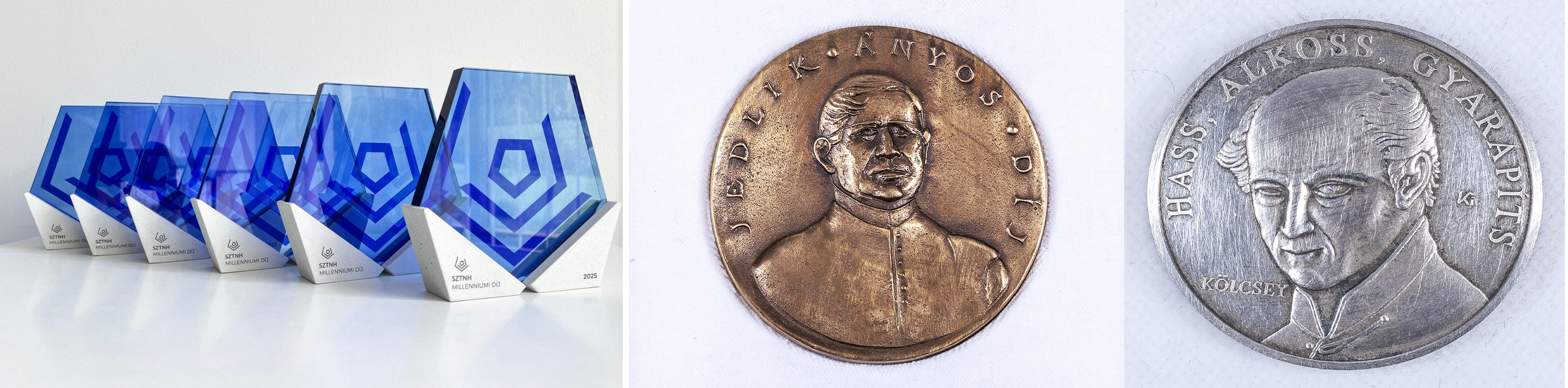
Awards Established by the Office
The Jedlik Ányos Award, established in 1996 at the initiative of the president of the office, can be awarded annually to five individuals in recognition of outstandingly successful inventive activity and distinguished work in industrial property protection. The Academic Patent Standard Award, which has become a prestigious recognition of scientific achievements, was jointly established in 1997 by the president of the Hungarian Intellectual Property Office and the president of the Hungarian Academy of Sciences. Nominations for the award are proposed by the scientific departments of the Academy, and the award is conferred by a committee consisting of representatives of the office and the Academy.
Other awards maintained by the Hungarian Intellectual Property Office include the Millennium Award, established on the thousandth anniversary of the foundation of the state, which the office awards on World Intellectual Property Day to state institutions and private organizations promoting intellectual property protection.
Finally, there is the Ujvári János Diploma Award, established in 2011, which recognizes theses dealing with the topic of intellectual property protection.

Websites and electronic administration
In 1996, the Hungarian Patent Office became the first Hungarian administrative authority to launch a website, which, in addition to industrial property laws and databases, also published the catalog of the Patent Gazette. Over the years, the website has been revamped several times: in 2015, it switched to responsive technology, and in 2025, alongside a complete rebranding of the office, the website was entirely renewed in both structure and appearance, becoming user-friendly.
Since January 2007, patent and trademark applications could be submitted electronically to the Hungarian industrial property authority, and from July 2007, numerous other submissions related to other forms of protection could also be filed electronically. Since September 2015, the TM e-Filing system has been available for the electronic submission of national trademark applications. From May 27, 2025, the HPO introduced a new application system based on web forms.

The HIPO era
From January 1, 2011, the name of the office changed and its responsibilities expanded further. The new name reflects that, alongside its traditional industrial property authority activities, the Hungarian Intellectual Property Office is, in line with international and European trends, the custodian of full-spectrum intellectual property protection and the primary recipient of all state tasks in the field. The most urgent reason for the expansion of its authority was to eliminate the fragmentation of state tasks related to copyright among multiple institutions; for this purpose, the supervisory and registry tasks related to the joint management of copyright and related rights were transferred to the office.

The first IP strategy
In August 2013, the government adopted the Jedlik Plan, which was the first comprehensive government strategy for intellectual property protection in Hungary. Named after Ányos Jedlik, the policy strategy covered the period from 2013 to 2016, setting medium-term goals for the protection of intellectual property: along more than forty lines of action, prescribing over a hundred measures. The goal system has four main pillars: industrial property protection for the advancement of the national economy; copyright protection for the promotion of creative industries and culture; serving national policy and certain government policies through the tools of intellectual property; and enhancing the institutional performance capacity of intellectual property. The Jedlik Plan also included the Anti-Counterfeiting Action Plan.

The significance of the PCT
The Patent Cooperation Treaty (PCT) is an international agreement that facilitates the acquisition of foreign patents, and Hungary has been a member since 1980. Under the treaty, patent proceedings can be initiated in all contracting states with a single application filed in one language in one country. The application is equivalent to national (or regional) patent applications in the contracting states designated by the applicant in the international application.
During the first, international phase of the procedure, the international searching and preliminary examining authority chosen by the applicant prepares a search report and, upon request, a preliminary examination report, and publishes the application. The second, national phase of the procedure is carried out at the initiative of the applicant before the designated national offices, which examine the application according to their own national laws.


The Madrid Agreement
The Madrid Agreement, concluded in 1891, allows for the international registration and filing of trademarks. The system is managed by the World Intellectual Property Organization (WIPO). After obtaining national protection, the trademark owner can file an application or request a renewal in any member country of the agreement with a single application, a single fee payment, and in one language (English or French). International registration offers numerous advantages for both trademark owners and national (territorial) trademark offices. As of early 2026, the Madrid Agreement covers 116 countries; these countries conduct about 80% of world trade. Hungary joined the Madrid Agreement in 1909.

János Frecskay Specialized Library
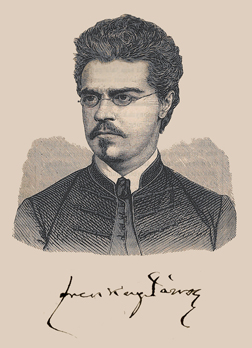
János Frecskay (1841–1919) was one of the most important figures in the Hungarian technical language and patent system. Combining his legal and engineering knowledge, he laid the foundations of domestic industrial property protection as an official of the Royal Hungarian Patent Office. His greatest professional achievement was the creation of the modern Hungarian technical vocabulary: he is credited with the five-language Dictionary of Crafts. In it, he organized accurate technical terms, which was essential for describing Hungarian inventions precisely at an international level.
In honor of his work, the professional library of the Hungarian Intellectual Property Office has borne the name of János Frecskay since April 2004. The library collects, organizes, stores, and provides access to literature related to intellectual property protection and its related fields and also holds an outstanding collection of trademark history.

Political and patent cooperation of the Visegrad countries
After the signing of the Visegrad Declaration in 1991, the industrial property offices of the first three and then four countries of the Visegrad Group (the Czech Republic, Poland, Hungary and Slovakia) also started close cooperation, in which the Hungarian office took the initiative. Initially, the main goal of the joint work was to prepare for EU accession, which was replaced by the discussion of intellectual property protection issues at international and regional level. On 26 February 2015, the heads of the patent authorities signed the agreement on the establishment of the Visegrad Patent Institute (VPI) in Bratislava. The Budapest-based VPI – as the international research and preliminary examination body of the Central and Eastern European region – has made it possible for inventors and businesses in the region to use the PCT system under more advantageous conditions than before.
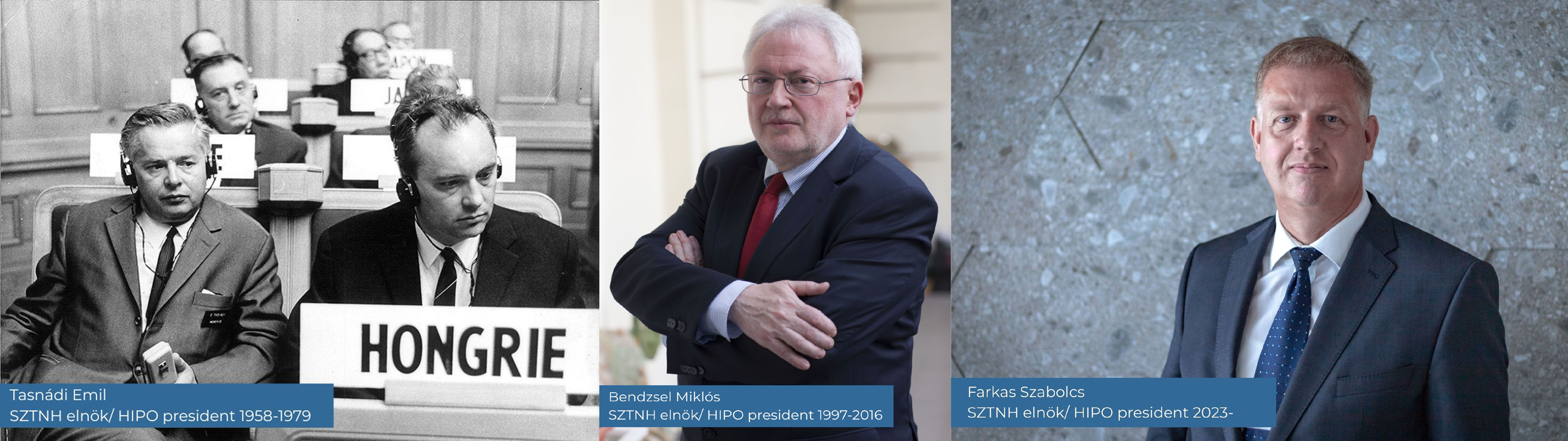
Presidents and their legacy
Since 1896, numerous (a total of 21) key leaders have headed the Hungarian Intellectual Property Office and its predecessor institutions, from the Patent Office to the Patent Court and the National Invention Office, up to today's HIPO. The longest-serving head was Emil Tasnádi, who led the office from 1958 to 1979, directing the institution for a total of 21 years and shaping its professional development during the period of socialist industrial policy. The shortest term (1 year) is associated with Rudolf Schuster and the only female president, Anna Balázs, who held the position from 1951 to 1952. From later periods, Miklós Bendzsel stands out for his long leadership, spanning from 1997 to 2016, which shaped the era of modern, internationally integrated Hungarian intellectual property protection. The current president of IPH is Szabolcs Farkas, who has been leading the Office since May 1, 2023.